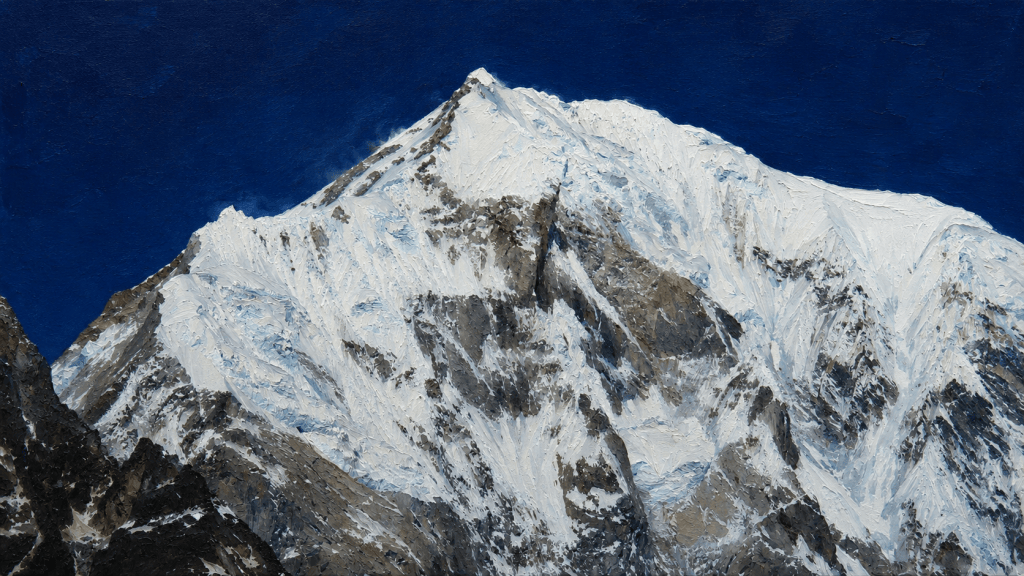
Humanity once again watched in shock and sorrow as a devastating flood struck Nepal, when a sudden torrent of water, mud and debris swept through communities near the Nepal–Tibet border, destroying villages and infrastructure in its path. The catastrophe ultimately claimed the lives of hundreds of people, while thousands more remain missing.
Once again, we will carry out a brief astrological investigation using the techniques of traditional mundane astrology. This time, our main tool will be the Lunar Return of the Aries Ingress chart.
From the Aries Ingress chart, cast for the moment the Sun enters 0° Aries and for the location under examination (annual mundane horoscope), we can then calculate the Lunar Returns, cast each time the Moon returns to its exact position in the Aries Ingress chart. These returns divide the year into successive lunar periods and allow us to examine which particular month most strongly activates the indications already contained in the annual chart. In this way, we can attempt to identify the lunar month in which the destructive event is most clearly shown.
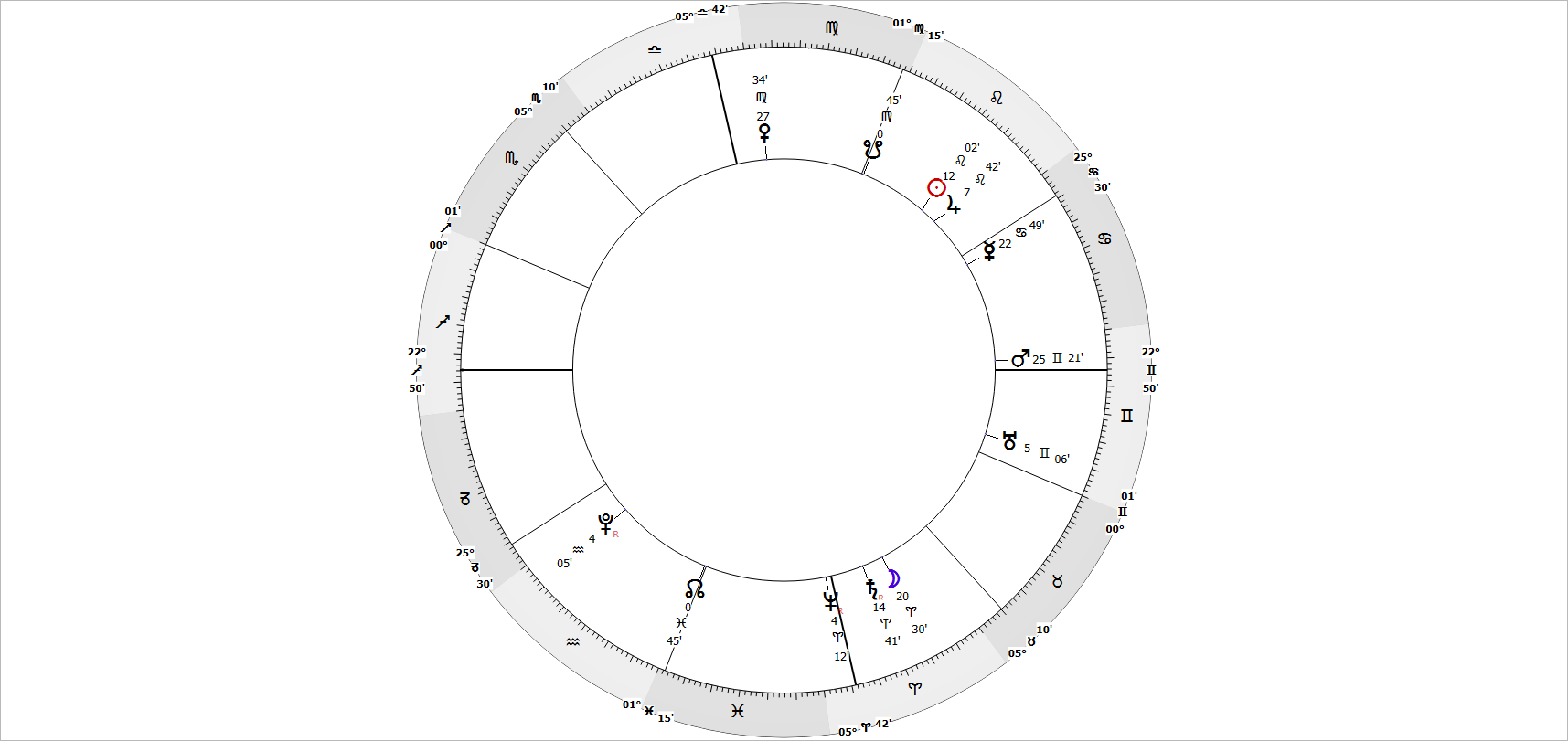
In the Lunar Return covering the lunar month in which the flood occurred, calculated from the Aries Ingress chart, the fourth house immediately stands out. In mundane astrology, the fourth house signifies the land, the ground and the physical territory itself. Most strikingly, the cusp of the 4th house is in conjunction with Neptune, directly linking matters of the land with the symbolism of Poseidon. In Greek mythology, Poseidon was not only the god of the sea and its destructive waters, but also the “Earth-Shaker,” capable of violently disturbing the earth with his trident. The conjunction of Neptune with the 4th house cusp therefore provides a particularly strong indication of the land being affected by destructive water, making it an important testimony for flooding.
Within the same house, we also find Saturn in its fall and the Moon peregrine. Both planets afflict the fourth house by their presence, although in different ways. Saturn is the traditional significator of cold, ice, boundaries, barriers and solid, heavy structures that restrain or contain. Being essentially debilitated by fall, however, Saturn is unable to perform these functions properly, suggesting the weakening, failure or collapse of such structures. This can be reflected in collapsing buildings, broken barriers, displaced earth and the large amounts of heavy debris carried by the water. What should remain fixed, solid and contained instead becomes unstable, fragmented and swept away.
The Moon requires some additional consideration. In every Lunar Return, by definition, the Moon returns to exactly the same zodiacal position it occupied in the Aries Ingress chart. Its essential condition therefore remains the same from one return to another. What changes, however, is its house placement, as the angles and houses of each return are different. For this reason, the house in which the Moon falls becomes particularly significant, showing the area of life or mundane affairs upon which its symbolism is focused during that particular lunar month.
In this return, the Moon falls in the fourth house, directly emphasizing matters concerning the land and the ground. As the natural significator of moisture and water, its presence here is already highly relevant. Moreover, the Moon is peregrine and placed in a sign ruled by Mars, giving its expression a distinctly martial quality. The combination of the Moon’s watery nature with the violent, forceful and disruptive character of Mars therefore provides a further testimony of water becoming uncontrolled and destructive — an appropriate indication for flooding. This Moon is also Lord 8, the ruler of the house of death, thereby directly connecting fatality with fourth-house matters concerning the land and the ground.
The Moon is also the natural significator of the people of a country or region, and here she forms a square with Mercury in the eighth house of death. Mercury is Lord 6, the ruler of the house of accidents and injuries, thereby directly connecting the people with accidental harm and fatality. The symbolism becomes even more specific through Mercury’s condition. As a naturally swift planet, placed here in Cancer — a cardinal water sign — Mercury describes something sudden, rapidly developing and strongly associated with water. The square between the Moon and Mercury therefore provides a further testimony of a fast-moving, water-related accident affecting the population.
Mars of force and attack, as the accidental ruler of the fourth house and therefore the significator of the land of Nepal, forms an opposition to the Ascendant of the Lunar Return, bringing the affairs of the land into direct conflict with the place and its inhabitants. This testimony becomes considerably more striking because Mars is positioned on the fixed star Al Hecka, located on the southern horn of Taurus. The horns of the Bull carry an inherently harmful symbolism: they are the weapons with which the animal wounds and attacks, and are therefore traditionally associated with violence, injuries and accidents. Mars, already naturally destructive, is thus reinforced by the nature and imagery of Al Hecka, adding another indication of violent events affecting the region of Nepal.
Finally, Jupiter, as Lord 1 and therefore the accidental significator of Nepal itself, is combust the Sun. Combustion is one of the most severe accidental afflictions a planet can suffer, placing the country’s significator in a condition of extreme weakness and greatly limiting its ability to act effectively. Adding further weight to this testimony, Jupiter is conjunct the fixed star Praesepe (in the constellation of Cancer), an extremely difficult star associated with energy or desire moving in many different directions, producing fragmentation and a loss of cohesion. Jupiter, the significator of Nepal, is therefore not only severely weakened by combustion but also placed upon a star whose symbolism reinforces themes of fragmentation and disintegration. In the context of the Nepal flood, this symbolism of fragmentation can be understood as the breaking apart of normal order and physical cohesion: land is destabilized, infrastructure is disrupted, communities become isolated and the affected region is, quite literally, divided by the destructive force of water (Cancer).

